# 🚤 1.1. Gargantext analysis process
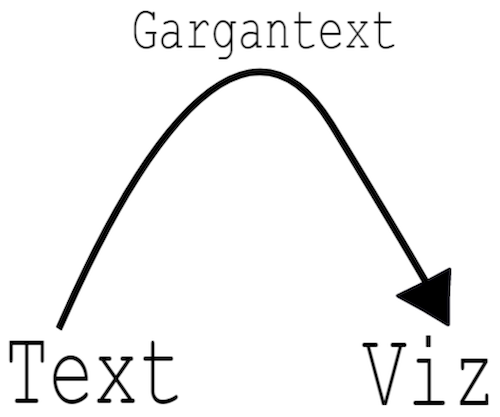
Gargantext is an online software solution for the production, exploration and annotation of bibliographic corpus analysis.
> By "bibliographic corpus" we mean, on a given subject or theme, several hundred bibliographic references from scientific and technical databases (such as [Web of Knowledge](https://webofknowledge.com/) or [Scopus](https://www.scopus.com/)), which it is impossible to process sequentially and manually.
>
It is designed for teachers, researchers, students in higher education and documentalists, as well as for watchers, specialists in an R&D or economic field, who are not necessarily documentation or IT professionals, and who want, in a given field of knowledge :
* gain an overview and a first approach to the research topic,
* follow and analyze thematic developments, identify non-explicit intra- and inter-theme relationships,
* identify the emergence of new technologies and research themes,
* identify and group players and their institutions by theme,
* identify poles of excellence and evaluate the thematic positioning of players, institutions or countries.
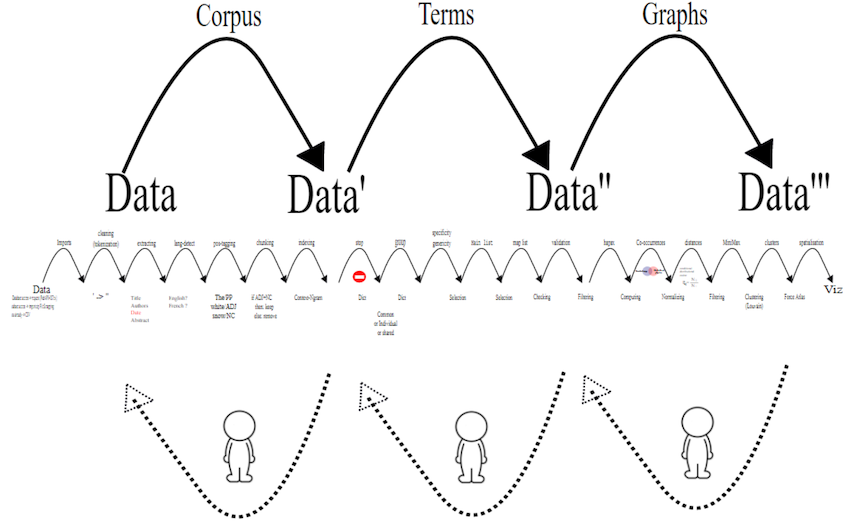
Before getting to grips with Gargantext, it's useful to have a basic understanding of how it's processed. Gargantext's processing goes through three phases:
1. [Corpus cleaning](https://write.frame.gargantext.org/s/74ccb14a280ea5097c04aaef07121365d015e03c596306e49d307010ff0f4a8d) using advanced text-mining and automatic natural language processing techniques,
2. Indexing and analysis of terms using datamining and statistical processing techniques,
3. Graphical and visual representation of the processed data obtained.
[](https://dl.gargantext.org/workflow.svg)